About Us
Discover how we advance the business voice at the OECD through a clear institutional mandate, robust governance, and a diverse global network.

About Us
The OECD
The OECD
Explore how the OECD shapes market-based economies through its standards, recommendations and analysis that matter to the private sector.
About the OECD
Explore the OECD’s role and features
Why the OECD Matters
Find out how the OECD impacts business
OECD Enlargement
Discover the OECD Accession process
.jpg?width=4554&height=3138&name=2019%20OECD%20Forum%20(1).jpg)
Learn more about the OECD
See morePolicy Areas
Advocacy
Advocacy
Explore how we bring business priorities to the table in our engagement with Governments, the OECD, and the G7, and the G20.
Engagement with Ministers
How we engage with Government Ministers
Consultation with the OECD's Council
How we advise the OECD's Leadership and Ambassadors
Role in the OECD's Bodies
How we contribute to the OECD's Committees and Working Parties
Advice to the G7 and G20
How we support the B7 and B20
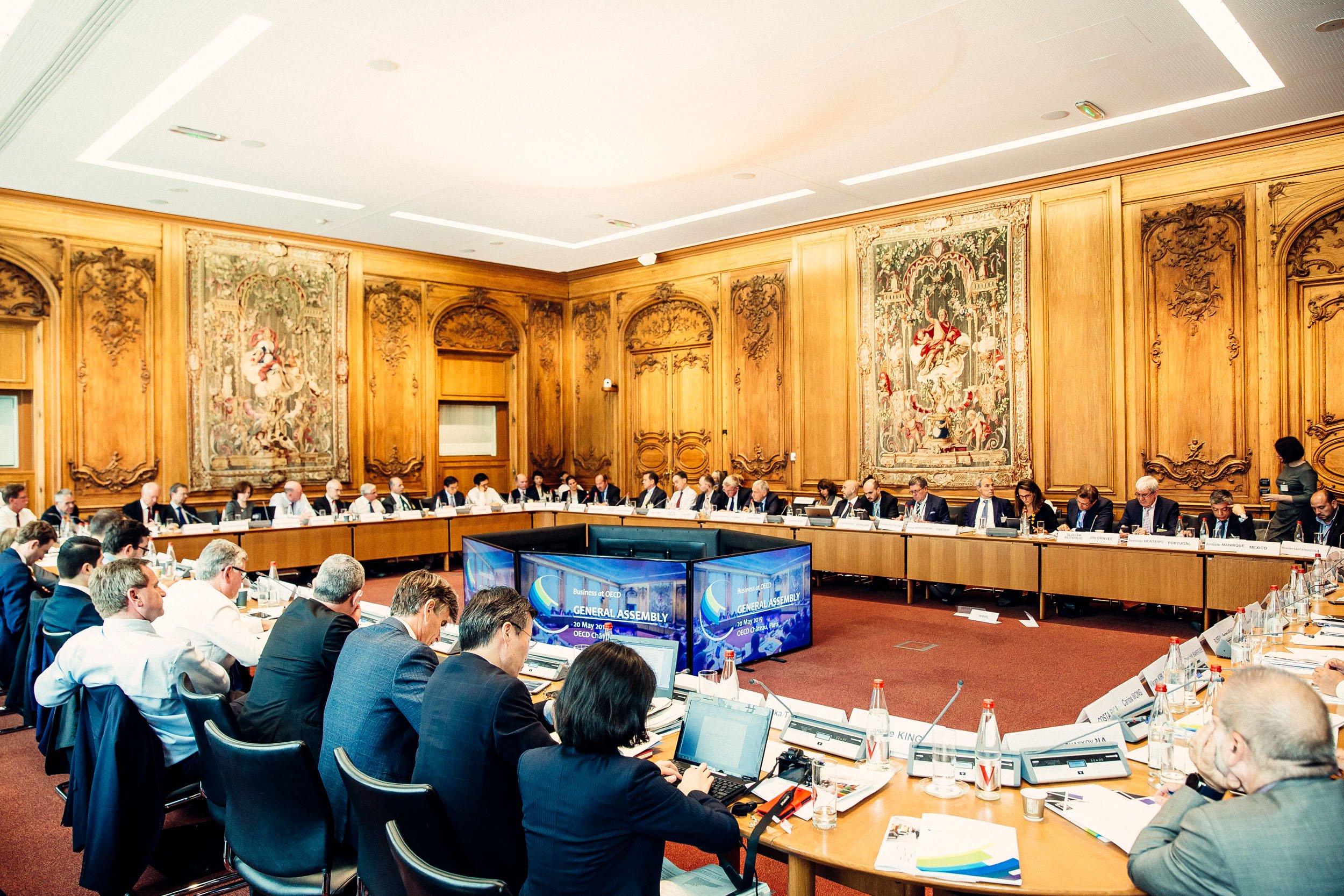
Stay tuned on our upcoming advocacy through our major events programme
Register hereNewsroom
Published on 06/11/2025
Updated on 04/12/2025
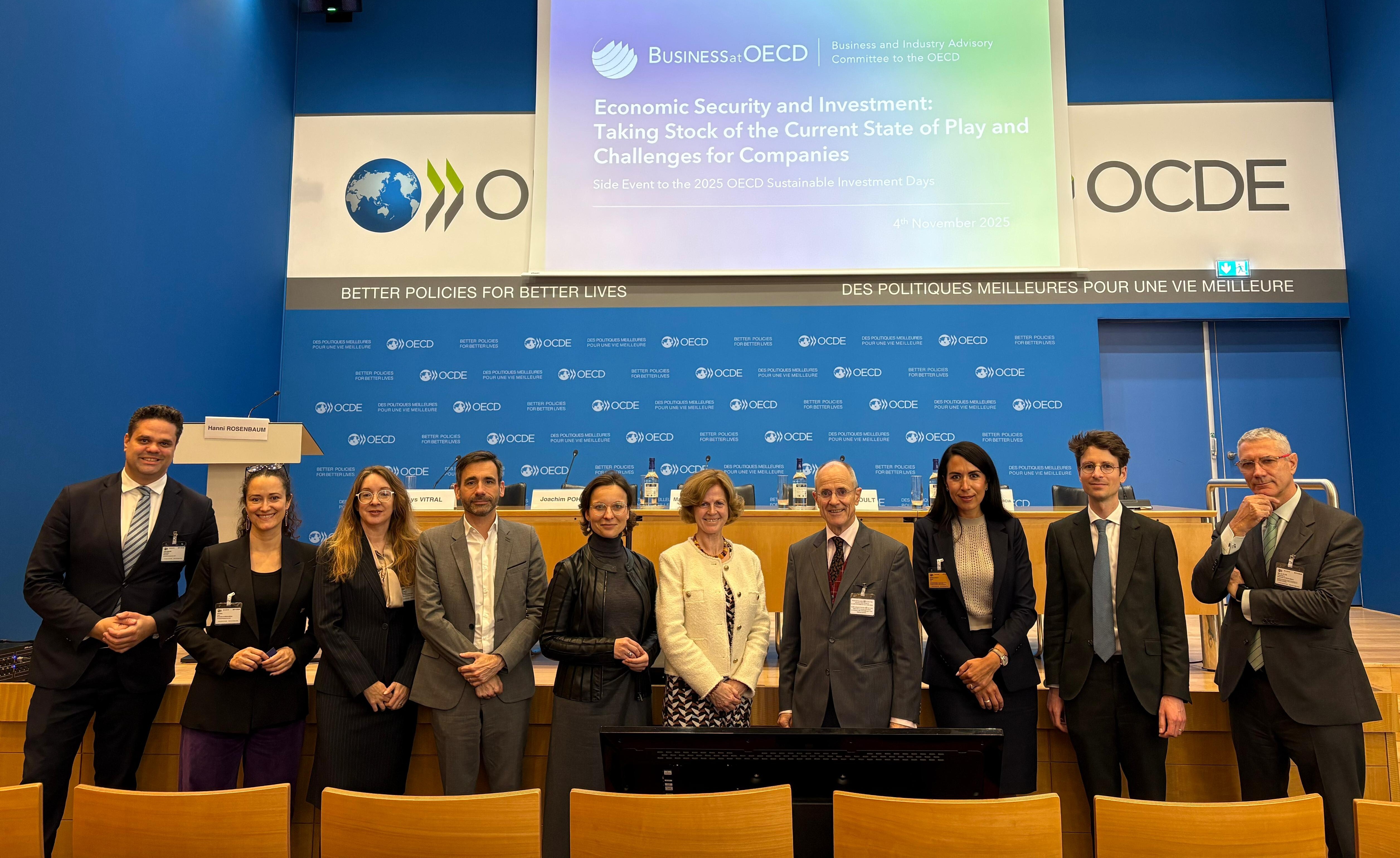
Business at OECD actively participated in the OECD Sustainable Investment Days in Paris on 4 - 6 November. Among many interventions, one particular highlight was the Business at OECD active contribution to the OECD Roundtable on Investment and Sustainable Development, bringing forward the business perspective on how investment policies can foster resilience, sustainability, and trust in international cooperation amid growing geopolitical and economic challenges.
As part of these OECD Sustainable Investment Days, Business at OECD also organised on 4 November a side event on “Economic Security & Investment: Taking Stock of the Current State of Play and Challenges for Companies.” The discussion gathered members of our business network, including VNO-NCW, MEDEF, Sanofi, Intel, Pernod Ricard, Siemens, Enagás, and policymakers to explore how to balance national security policies with the imperative to maintain open, predictable investment frameworks.
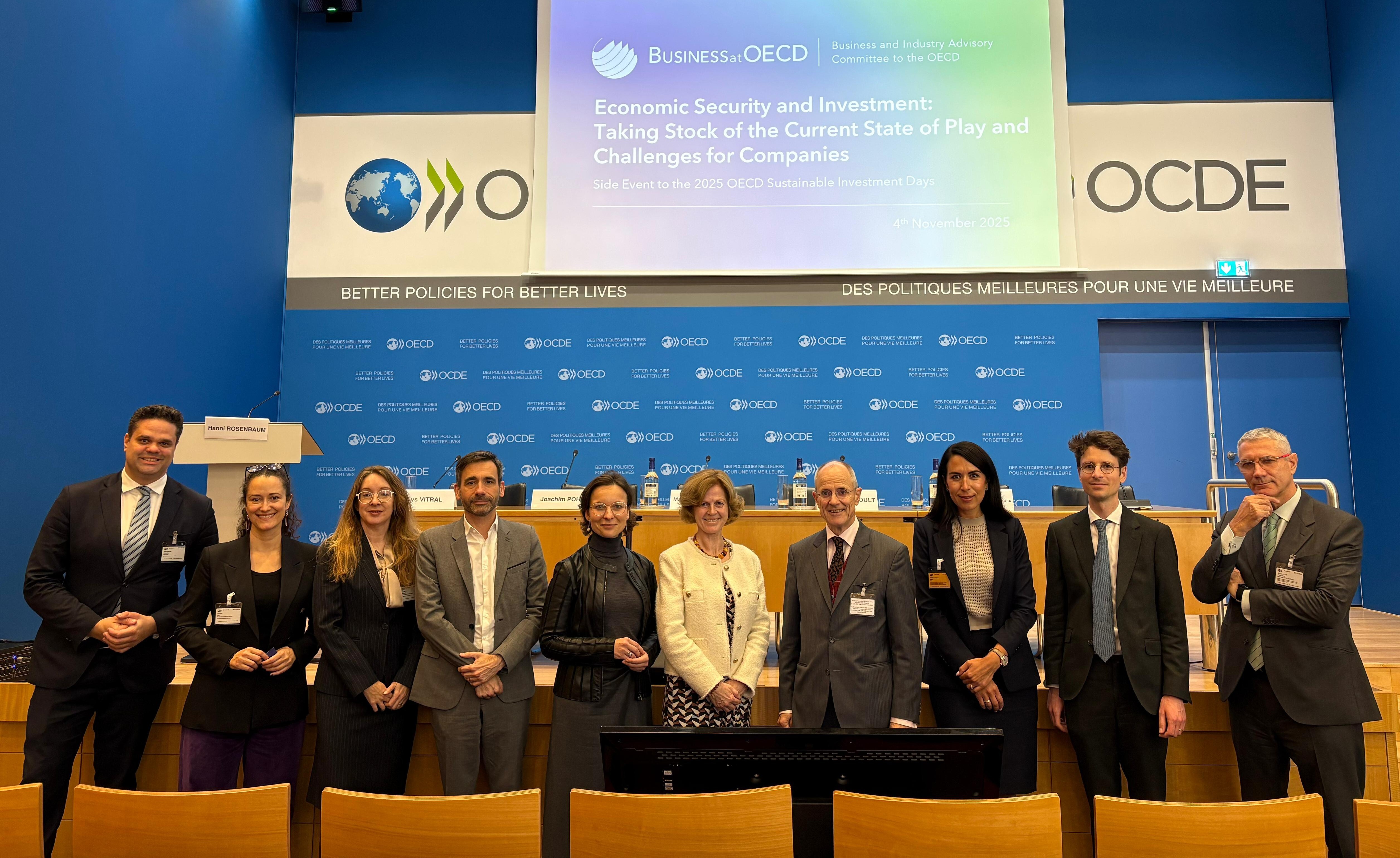

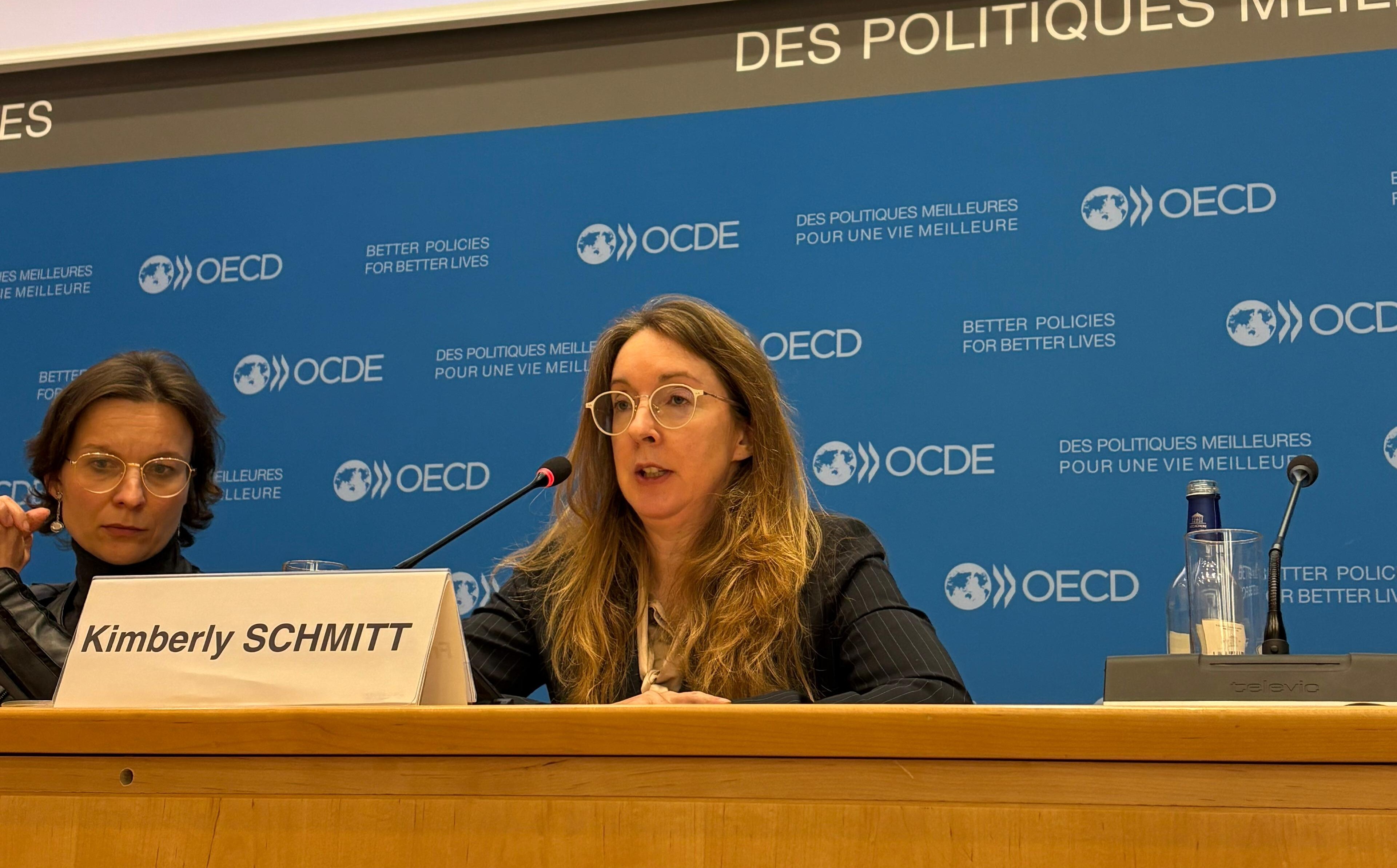

There are three main takeaways from the discussions that took place in this event. First, when it comes to economic security, a strong emphasis was put on concrete ways to balance openness and security. Speakers agreed that effective investment screening must protect legitimate security interests without deterring productive cross-border investment. Transparency, predictability, and proportionality were identified as essential to maintain business confidence. They called for evidence-based, risk-proportionate frameworks that strengthen resilience without disrupting global operations. Second, participants underlined the importance of international coordination to avoid regulatory fragmentation. The OECD’s policy guidance and EU cooperation mechanisms were seen as key tools to align national approaches. Third, an onus was put on the importance of public-private collaboration. Companies urged governments to engage the private sector in designing and implementing security policies to ensure that measures remain practical, coherent, and supportive of competitiveness.
Looking ahead, Business at OECD reaffirmed its commitment to advancing balanced, rules-based investment policies and to working with the OECD Investment Committee towards the 50th Anniversary of the OECD Investment Declaration in 2026.